


Denae Thrasher, AMFT
+ASSOCIATE MARRIAGE AND FAMILY THERAPIST
+SUPERVISED BY RACHEL DAGGETT, LMFT
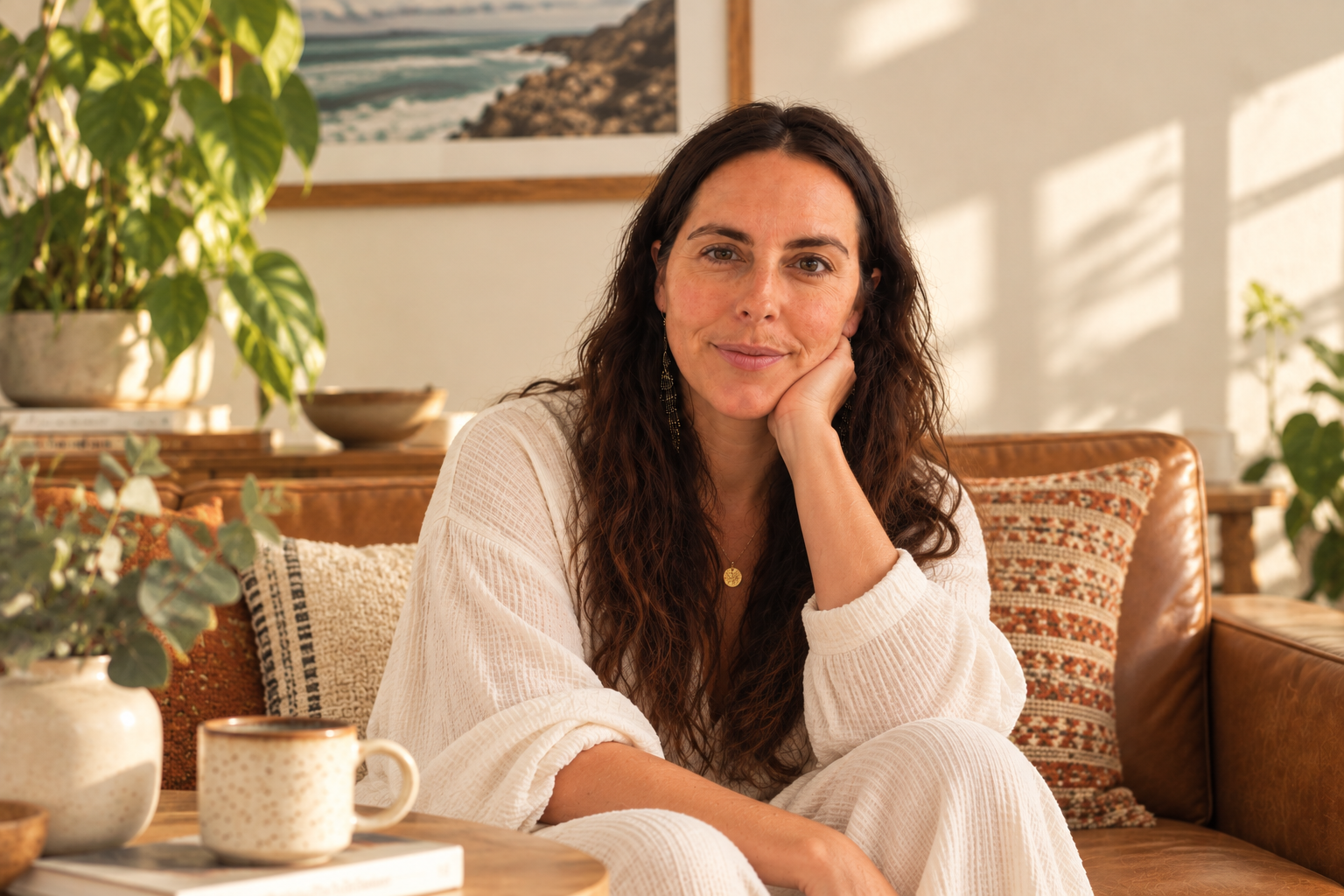
Why I became a therapist
I used to think therapists were self-proclaimed gurus—people who somehow thought they had life figured out and were going to tell everyone else how to live theirs. Needless to say, I had absolutely no interest in going to one.
Until I did.
And thankfully I found the right therapist, for me.
Having someone I could share the ugly with—someone who helped me process my past, understand myself differently, and figure out how I wanted to move forward—changed me in ways I didn't even know I needed.
That experience changed the way I saw therapy, and eventually, the direction of my own life.
Today, I feel incredibly honored to do this work. To sit alongside another person as we figure life out together. To be the ear I once needed and was lucky enough to eventually find.
I see therapy as a place where we can turn the light on and start organizing that dark basement of stories, experiences, pain, confusion, and things we've learned to hide underneath a smile.
You decide what you want to keep, what you're ready to let go of, and what you want your life to look like when you walk back upstairs.
Why I love this work
I love this work because I believe therapy can work when we're willing to show up for it.It's rare that we get uninterrupted time to simply sit with ourselves. Life moves fast. We work, parent, scroll, rush, distract, take care of everyone else, and find a million ways to keep moving.
Therapy asks us to stop for a minute.
To be present. To feel. To get curious about ourselves. To ask: What do I actually want? Why do I keep doing this? What am I carrying? What isn't working anymore?
I love hearing people's stories and getting to know the unique person behind them. I love those moments when something finally clicks, when an old story starts to make sense, or when someone begins seeing themselves with a little more compassion.
I love this work because it creates space to feel in a world that gives us so many opportunities to rush and numb. And I love that healing doesn't have to mean becoming someone new. Sometimes it's finally getting back to who you were underneath everything else.
Who I’m most drawn to supporting
Honestly? People. People in pain. People who are ready for change.
I don't believe we need to compare pain or decide whose trauma is "bad enough" to deserve support. If something is affecting your life, your relationships, or the way you feel about yourself, it's worth talking about.
For nearly two decades, I've worked in community mental health alongside young people and families navigating trauma, foster care, instability, grief, crisis, and major life changes. That work will always be an important part of who I am as a therapist, and I have a particular place in my heart for teens and young adults.
I'm also a mom, and I love supporting men and women through pregnancy, postpartum, parenthood, and the enormous identity shift that can come with becoming responsible for another tiny human.
I'm especially drawn to people moving through transitions—whether that's identity, relationships, parenthood, recovery, loss, sexuality, faith, career, or simply realizing that the life you've been living doesn't quite fit anymore.
But you don't have to fall into a particular category to sit across from me.
If you're looking for a place to understand yourself, heal something that hurts, or figure out what comes next, there's room for you here.
My therapy style (and how I balance warmth & accountability)
I want therapy to feel a little like a warm hug.
Not because everything we talk about will be warm and comfortable—it won't be. Therapy often asks us to go toward the things we've spent years trying not to look at.
But I want you to know that you are safe and held while we do it.
I think of it a little like being lost at sea. There may be storms we can't avoid, but somewhere ahead is an island. My job isn't to pretend the storm isn't happening or make the waves disappear. It's to get in the boat with you, help you understand what you're navigating, and hopefully make the sail a little easier until you can find your footing again.
I'm warm and compassionate, but I also may challenge you by noticing patterns or asking uncomfortable questions, and gently call attention to the places where what you say you want and what you're doing might not quite line up.
And there will probably be laughter.
Humor has carried me through some of life's hardest moments, and I believe there can be room for lightness even when we're exploring the depths. Therapy doesn't have to feel heavy every minute to be meaningful.
Approaches & modalities I use
I don't believe in a one-size-fits-all approach to therapy because people are not one-size-fits-all.
I draw from a variety of approaches, including Cognitive Behavioral Therapy (CBT), Acceptance and Commitment Therapy (ACT), Solution-Focused Therapy, Narrative Therapy, Somatic Approaches, and Internal Family Systems (IFS).
Sometimes we'll explore the stories you've been carrying. Sometimes we'll look at thoughts and patterns that are keeping you stuck. Sometimes we'll focus on your values and what you want your life to look like moving forward. And sometimes we'll slow down enough to notice what's happening in your body when words aren't quite getting us there.
The modality matters, but the person sitting in front of me matters more.
We'll figure out what works for you together.
How we’ll begin
We start with you.
What's bringing you to therapy? What's happening in your life right now? What would you love to feel different? What do you hope to get from our time together?
And just as importantly, we'll see if we're a good fit for one another.
I want you to feel empowered in this process. Therapy is yours. I welcome you telling me what works, what doesn't, what you need more of, and even when something I've said doesn't land.
You don't need to arrive with your entire story organized or know exactly what you want to work on.
That's something we can figure out together.
What therapy with me feels like
My hope is that therapy with me feels like exhaling.
Like sitting on the beach with your feet in the sand, or curling up on a warm couch with a cup of whatever fits your fancy, and talking about life.
The dreams and hopes. The relationships. The weird stuff. The hurt. The anger. The grief. The things you've never said out loud. The things you're still trying to understand.
Some days we might laugh a lot. Other days we may sit quietly for a minute because you need time to think.
If it feels right for you, we can incorporate meditation, grounding, moments of stillness, or somatic practices that help us work with what your body is holding—not only what your mind can explain.
You don't have to fill every silence here.
You don't have to show up polished.
You just have to show up.
What helps people heal
I don't think there's one magical thing that heals people.
I think healing happens in moments.
It's telling the truth somewhere you feel safe enough to tell it. It's being seen without having to perform. It's understanding that some of the things you dislike about yourself may have once been ways you learned to survive.
It's learning to listen to your body. Letting yourself grieve. Getting angry. Laughing again. Setting a boundary. Changing an old pattern. Finding people who make you feel safe. Going outside. Moving your body. Creating something. Resting without earning it first.
Sometimes healing is understanding the past.
Sometimes it's deciding that the past doesn't get to make every decision about your future.
I believe we heal through connection, safety, curiosity, honesty, self-compassion, accountability, and experiences that remind us we're alive.
Therapy can be part of that.
But I also hope therapy helps you find healing outside of this room—in your relationships, your community, nature, movement, creativity, adventure, and the life you're building for yourself.
What I hope you take with you
I hope you leave therapy knowing yourself a little better and trusting yourself a whole lot more.
I hope you understand where you've been without believing it has to determine where you're going.
I hope you learn to recognize your patterns without hating yourself for having them. To hold yourself accountable without tearing yourself apart. To know what you need and feel worthy of asking for it.
I hope you have tools for the storms, but I also hope you don't spend your whole life preparing for the next one.
I hope you rest. Play. Love people deeply. Change your mind. Try things. Make mistakes. Laugh at yourself. Put your feet in the sand. Build relationships that feel safe. Find the things that make you feel alive and make room for more of them.
Most of all, I hope therapy helps you feel more at home in your own life.
Not the life someone else told you to want.
Not the life you think you should be living.
Yours.
Get to know me
WORK WITH DENAE
A space to soften, reconnect, and grow.
AREAS I SPECIALIZE IN
ADHD.
Anxiety.
Depression.
IFS.
ADHD. Anxiety. Depression. IFS.
Trauma.
Low Self- Esteem.
Self- Harm.
Grief & Loss.
LGBTQ+.
Trauma. Low Self- Esteem. Self- Harm. Grief & Loss. LGBTQ+.
Parenting.
Teens.
Families.
Prenatal and Postpartum Mental Health.
Parenting. Teens. Families. Prenatal and Postpartum Mental Health.